Showing posts with label profile. Show all posts

Thursday, July 17, 2014

Kelsey Russell: The "Gonna Go Someplace Kid"


July 17 2014
by Merri Melde

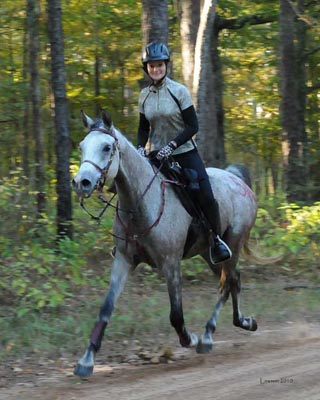
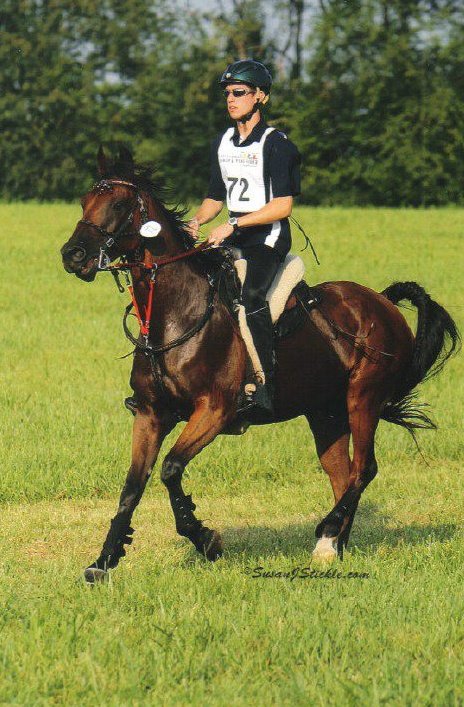
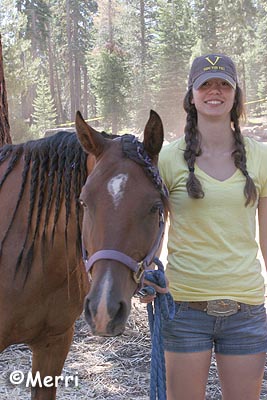
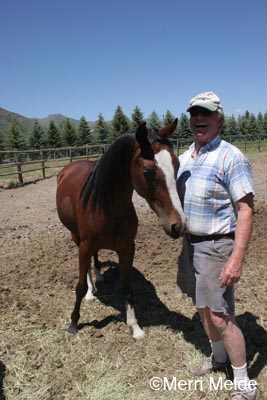
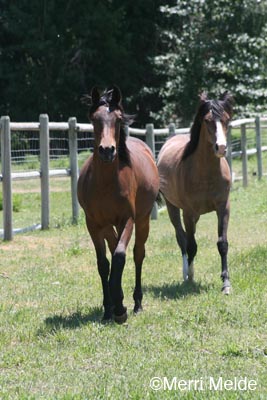
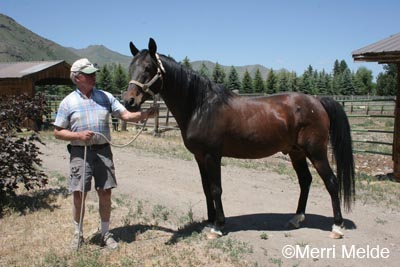
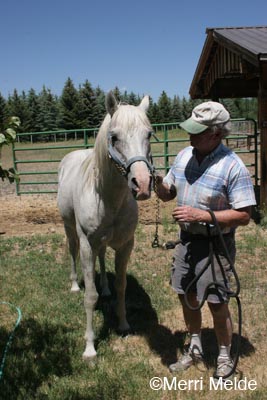
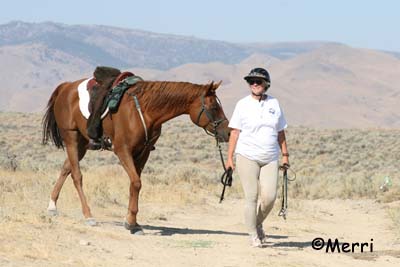
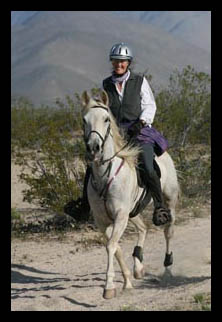
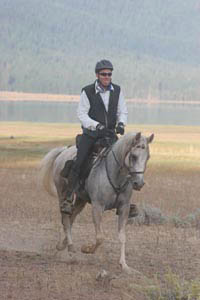
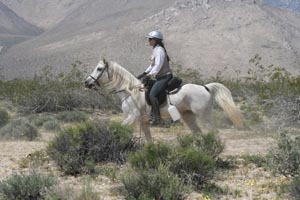
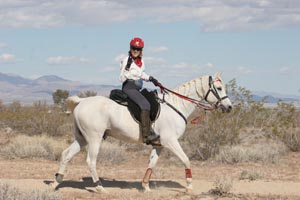
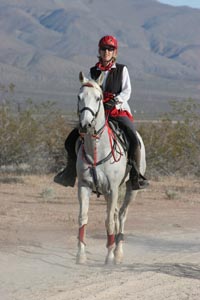
Kelsey Russell, a Young Rider, is one of the USA Endurance Team riders for the 2014 World Equestrian Games Endurance Race in France

"She's as cool and calculating as any of the senior riders," says USA Chef d'Equipe Emmett Ross of Kelsey Russell, the first Young Rider to ever make the senior World Championship USA Endurance Team. "And of course she's a chip off the old block, because she rides for Valerie Kanavy, and Valerie has been coaching her ever since she's been a kid."

Kanavy hardly needs any introduction in endurance circles, being a 2-time former World Endurance Champion in 1994 in The Netherlands, and 1998 in the United Arab Emirates. Being only 18, Russell isn't as well known yet, but that's not because she's been hiding in the stables.

"I've been on horses pretty much my whole life," Russell says. "With my aunt I do barrel racing and western riding." It wasn't till about 5 years ago that Russell boarded her horses in Kanavy's stable across the street and discovered endurance. "I started riding endurance with her the following winter, and I have been ever since."

It was obvious to Kanavy that Russell was a horsewoman from the beginning. "She was like a little monkey that hung on, no matter what. Sometimes the horses would do things, and we'd be going, 'Oh no!', but she didn't come off," Kanavy laughs.

Russell, from Williston, Florida, did her first endurance ride in January of 2010 on one of Kanavy's horses, Layla Z Gold. Since then, Russell has racked up over 1800 AERC miles, a first place finish in the 2011 North American Young Riders FEI Championships aboard Kanavy's My Wild Irish Gold, a 6th place finish aboard Kanavy's Gold Raven in the 2011 FEI Young Rider Junior World Endurance Championship in Abu Dhabi, and a 5th place finish with My Wild Irish Gold in the 2013 Young Rider Junior World Endurance Championship in Tarbes, France.

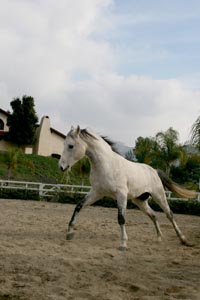
Russell will be riding My Wild Irish Gold on the USA Team in the 2014 World Equestrian Games Endurance Race in Normandy, France on August 28, 2014. "Irish" is a 10 coming 11-year-old bay Anglo-Arabian mare, owned and bred by Kanavy's Gold Medal Farms. She is Russell's favorite horse in the stable to ride. "She's comfortable; she likes to go, but she has a brain. She doesn't get stupid, and she doesn't waste her energy," Russell says.

Russell's first endurance ride on Irish was a 2nd place finish in the Goethe Challenge 75-miler in December of 2010. Since then, they've completed 10 endurance races in the USA together (including 4 wins and a Best Condition), and the 2 overseas races. Their best ride, Russell says, was the Young Rider Junior Championship in France last year where the mare covered the 120-km course in 6 1/2 hours.

Russell is not daunted at all by riding alongside experienced senior riders in such a prestigious Championship race in France. "I ride with quite a few of them and I hang out with them at the rides so I know them pretty well. It'll be different than the Young Riders, but I think it'll be fun and it'll be a really good experience," she says matter-of-factly.

Kanavy knows Russell can handle the pressure, and is delighted with her accomplishments. "I'm pretty proud of her all the way around. I'm proud of her for what she does in school and all her other activities too; it's not just about riding. She's an all-around 'Gonna Go Someplace Kid.' She has great family support, and I think where she is, and what she's accomplished, is because she's determined, and she is a dynamite worker. I'm more proud of the way she's conducted her whole life; and her good will and determination to go somewhere and be somebody, and be the best you can be - she takes that to another level."

Russell will be riding at the top level in France next month, aboard a top level mare, with a top level team, coach, family, and mentor rooting her on, and it's likely she will take it all in stride.

Correction:
Kelsey Russell is the second junior to ride as a senior team member.
Joe Mattingly rode as a 16-year-old as a US Team Member at the 1988 World Championship in Front Royal, Virginia and placed 7th overall. In 1990, at the age of 18, he was a US Team Member at the 1990 World Championship in Stockholm, Sweden at the first ever World Equestrian Games (his horse retired at 75 miles).

Friday, February 3, 2012

The Bug


Alisija Granger and Dixieland Dude
Photo by John Lawson


Friday February 3 2012

It's hard to say who is more excited, Alisija Zabavska-Granger, or the country of LIthuania.

Possibly it's the country: "Lithuania is freaking out!" says Alisija, referring to the that fact that she and her 9-year-old gelding Dixieland Dude (aka "Jude") sit 15th on the 2011 FEI Open Combination World Ranking list in the discipline of endurance. It's the first time in Lithuania's history that an equestrian athlete in any discipline has ranked so high. Not only are they highly ranked, but the pair will also fly the flag for her country in the 2012 FEI World Endurance Championship at Euston Park in Great Britain in August.

It hasn't been an easy path getting there. More than once on the long journey, Alisija said, "Never again!" and called it quits. Each time she caught The Bug again, and each time it's carried her to new career peaks.

In her normal life, 36-year-old Alisija trains horses in Texas, gives riding lessons, and shows Arabians for clients in Hunter Jumper, Western and English Pleasure classes, and Sport Horse disciplines. But her passion is endurance riding. It came about when she had to give up her other passion of show jumping.

In her native country of Lithuania as a junior, Alisija excelled in show jumping, representing her country nationally in the sport. After visiting her brother in the UAE in 1996, she fell in love with the warm climate and decided to stay and get a job. When she found she couldn't afford to compete in show jumping there, she started looking for another discipline in which she could compete internationally. That was when she came across a newspaper article that talked about the popularity of endurance riding.

"So I decided to get me an Arabian and start training it," Alisija says. "And obviously I didn't know what I was doing, because I would ride the hair off that poor Arabian - I would ride 20 miles every day in the desert." She knew something wasn't right. "I didn't know what I was doing, I didn't know where to go, how fast to go; I needed to find somebody I could ride with who could share some experience with me."

And then Fate intervened in the form of two Endurance Queens.

One day while out training in the desert, Alisija saw hoofprints. She followed them, but for a couple of days, she never managed to find the horses that laid them. Then one day while riding, her stallion started acting up, "and when I looked back, I saw three horses galloping toward me with the speed of thunder!"

It was a most auspicious encounter. Two of them turned out to be Jan Worthington and Grace Ramsey, the highly respected duo who pioneered the path for American women training endurance horses on the edge of the Rub'Al Khali desert in the UAE in the 1990's.

Like Jan and Grace have done for countless other aspiring endurance riders over the decades, they took Alisija under their wings, and they taught her about the sport of endurance - about training, feeding, and electrolytes, and they gave her a racing schedule. A few days later they put her on one of their horses in a 96-km endurance race - "and that's how I got baptized by fire!" Alisija says.

"I swore, I swore, with everything I had, that I would never, ever, do that again. I was so sore after that first ride, I had to be carried around. I wasn't able to walk. I told everyone, 'This is horrible, this is a nightmare, I'll never ever do this again, ever, in a million years!'

"…and ten days later I got back on a horse," Alisija laughs. "I got The Bug!"

After learning and gaining experience working and riding for endurance stables in the UAE, Alisija set her goals high: the World Equestrian Games in Jerez, Spain, in 2002. She qualified to ride in it, but paperwork problems with her Lithuanian federation were too overwhelming, and it ultimately didn't work out. Alisija moved to the US in 2005 to try to qualify for the next World Equestrian Games in Aachen, Germany in 2006, and thought she had done everything right, but again, paperwork problems botched that dream.

"Never again!" Alisija said. It was too disheartening and frustrating, after all that work.

But it wasn't long before she got The Bug again, because next was the World Equestrian Games in Kentucky in 2010. "It has to happen," she had said, "because now it's in my backyard!" She qualified again for the WEG on one of her horses, and the paperwork was perfect, but this time, bad luck stung her with a lame horse.

Then she met Merlin. A talented gelding owned by Ed Kidd, Alisija fell in love with Merlin after her first endurance ride on him, a 9th place finish in the 100-mile Fun In The Sun ride in March of 2010. "He's such an amazing horse. I don't think I've ever sat on a horse of that caliber before in my life. He is just a beast. He's a machine! That horse knows his job. The moment you point him to a starting line, he knows exactly what he has to do."

Alisija and Merlin in the Kentucky 2010 WEC

And so Alisija and Merlin faced the starting line of the World Endurance Championship during the World Equestrian Games in Lexington in September of 2010. FInally, her dream had come true. "I told everybody, 'as soon as I get to the World Equestrian Games and compete, I will be so relieved, because I've been trying so hard for so long, that will be it for me. I won't do it anymore. I would accomplish it and that would be something on my record."

Alisija and Merlin in the Kentucky 2010 WEC

Sadly, Alisija and Merlin were pulled after only the second loop, when Merlin cramped up from cold water at the vet check.

Alisija and Merlin in the Kentucky 2010 WEC

You can guess what happened after that.

"But of course, I got The Bug again! I told my husband Charles 'I didn't finish, I got pulled, so now I have to go for a good placing, and then I will quit! This time I have to get there again, and I have to do it with my own horse."

Enter Dixieland Dude. He'd been bred to be a show horse but he didn't have the looks for that. Alisija had bought him as an "unbroke" 4-year old in 2007, but in truth he was just plain wild, and uncatchable. Alisija was able to piece together the rest of the story later. Being unsuitable as a fancy show horse, he'd been kicked out in a pasture on his farm, and he'd turned somewhat feral. The only way they could catch him for shots and hoof trims was by lassoing him around the neck. A trainer had tried for a month to break him, then gave up.

But by the time Alisija knew all this, she already owned Dixieland Dude and had found out for herself just what he was like. "He was bad for a while; he wouldn't let me catch him. He wasn't easy to be around." Once she was able to catch him, it took her a long time to be able to just lead him without him trying to break away from her and run off.

Lesser mortals might have looked for another, easier prospect, but Alisija confesses: "It was love at first sight. And…" she pauses, "I don't want to say I'm crazy, but, I think I like challenges in life. I fell in love with the horse when I saw him, and I wanted him no matter what."

Dixieland Dude
Photo by John Nowell


And, so committed, Alisija took her time with "Jude", and eventually gained his trust. One day he let her climb on his back, and then she knew they were on their way. Alisija broke, trained, and started him in endurance. He's still hard to catch sometimes, but she brushes off this part of his personality: "I've learned in life that every super horse has some quirk."

And she is very excited about Jude's prospects. "He's amazing. He's not Merlin yet, but he may be, because he's still very young." His record is promising: seventeen rides over five seasons without a pull, all but one of those in the Top Ten (they got lost that day!). Their most recent ride was a second place finish in the 100-mile Goethe Challenge in December of 2011, where Jude got his COC (Certificate of Capability, 100 miles at or under the minimum qualification speed of 14 km/h) for the 2012 WEC.

Alisija wouldn't call him an easy ride. "He's got some spunk. He's confident with a good balanced rider, and he's getting better and better as he does more competitions. He can catch you off guard though, he can spook and get you off balance, so you have to keep your eyes open on him all the time. He's not the kind of horse you can ride on a loose rein and trust him," she says. "And he's strong! He starts out strong, then sometimes in the middle of the race he'll take a break, go to a slow canter or trot, and then get his second breath, and he picks it back up again. He knows how to take care of himself, and he eats and drinks wonderfully at a race."

Jude's not a smooth ride, either. "Since he was bred to show, he's got that high action trot. He's very bouncy. I'm sore for a week after I ride him in a competition!" That's saying something for a person who rides horses all day long.

The level course at Euston Park in Great Britain should suit Jude well. "Jude's not a big climber, but he's great on the flat. He also does well in sand and humidity."

Alisija is thrilled that she has achieved her dream of qualifying for the 2012 WEC on her own horse. "When you get to ride your own horse that you have developed from scratch, from nothing, from zero, I think that's like raising a child. It's amazing. This is my horse, that I've developed, I've trained. I didn't just go out and buy a horse, it's my baby, it's my child. So for me to represent Lithuania on this particular horse is a big big pride."

And she's going to go for it in Great Britain. "I don't want to go to the World Endurance Championship just to finish. I want to go and take chances. I want to race, I want to do my best, and I want to have a horse that will be able to compete with the top class horses. That's my goal."

After Alisija's ride in the Kentucky WEC, she's done her homework. She and her crew will prepare in advance - how they'll handle Jude in the vet checks, what they'll do in general. "I have more experience now, and I have a Bad Ass crew, and they are so excited about the whole thing. This is the biggest thing ever, and this time I think we have no excuse not to do very well." Alisija's husband Charles, who has supported her on her quests, will be a big part of her Great Britain WEC adventure this summer.

Endurance has not been a big sport in Lithuania, but Alisija and Jude just might change that. With the Federation behind her, there is talk of possible sponsorship in the works.

But if Alisija finishes well in Great Britain, don't believe her if she tells you she's accomplished her goal and she's done. "I already told my Federation, my next plan is France in 2014, of course! But first we have to get through England before we talk about France.

"The Bug is caught, and there's no quitting. I probably will be like Jan (Worthington), who is 70-something years old and trying every time."

Wednesday, November 30, 2011

Kyle Gibbon: Young Rider/Junior World Endurance Championship Competitor


Wednesday November 30 2011

Kyle Gibbon's first endurance ride with Steve Rojek could well have been his last.

Kyle, then 18, had already ridden endurance for 3 years, but he was used to his own paint horse and "little short-moving Arabs." And it had been a long time - 5 months - since his last endurance ride, when Kyle crossed the starting line on the Carolina hundred-mile ride on Steve's horse. Mel was an Arabian/Saddlebred cross, "a huge mover, very different - it was a different saddle, different pace - I was usually more of a conservative rider," Kyle says. "It was fast. And that horse beat me up! Every muscle I had hurt. Even every finger was bruised from the reins. Plus it was cold and raining. I was so glad when he was pulled at 75 miles for lameness, I crawled into the warm horse trailer and fell asleep. I was so sore I couldn't move!"

But Kyle lived to ride again - the very next week - with Steve Rojek, on another of Steve's horses Julio, this time a familiar Arabian, to a first place finish on a 50-mile ride. It was the cementing of a successful working relationship with the Rojeks, which has led Kyle, now 21, to his first ride overseas in the Young Rider/Junior World Endurance Championship in Abu Dhabi on December 10th. "I owe it all to Dinah and Steve. All thanks goes to them."


Kyle will be riding Steve's 16-year-old Arabian gelding Misu Koran in the 75-mile Championship in the UAE. Kyle's many years of riding experience since he was a youngster, his interest in jumping and showing, plus his 6 years and 5310 AERC miles of endurance experience will come in handy with Misu Koran.

"He's difficult to ride. He's the most difficult horse we have. He's very anxious and uptight. Some days he is good... but most days he's hot." Kyle has figured a few things out about Misu Koran over their 2 seasons and 9 rides together, which include 6 Top Ten finishes, 3 hundred-mile completions, a Best Condition Award, and a Bronze Medal at this year's North American Young Rider 75-mile Championship in Kentucky.

"We do a lot of cross training with all our horses - dressage, jumping, riding to the gas station and tying them up to stand and wait... but Misu's a little different. I don't treat him quite the same as the other horses. Despite his difficulty though, he's a sweet horse."

The Pennsylvania native, who now lives and works for the Rojeks in Vermont in the summers and Georgia in the winters, crewed for Steve Rojek in the Pan American Championship in Uruguay in 2009, so he has some idea of the kind of international competition and flavor that the Juniors and Young Riders will face in the UAE Championship.

"It will be interesting, and a lot different... It's desert - sandy, dusty, maybe even a sandstorm to deal with. There's driving around, tossing water bottles... (In the UAE, a crazy number of vehicles race over the sand alongside the riders and horses in the race, with crews passing water bottles through the car windows, or crews jumping out at regular intervals, handing out water bottles to riders on the fly, so the horses constantly have water poured on them.) But I don't think that will bother my horse."

None of the adventure seems daunting, and Kyle feels fortunate to be participating in it.

"I'm expecting we can do well; I'm hoping we can complete a team and maybe earn a medal. It will be so cool, meeting all these people from all over the world. It's going to be great!"

Tuesday, November 29, 2011

Steven Hay: Young Rider/Junior World Endurance Championship Competitor


Tuesday November 29 2011

The timing is a bit inconvenient for the Junior at Penn State University. "I leave on the 4th for Abu Dhabi, miss a week of school, get back on the 12th and have finals that week."

But, Steven Hay, an environmental resource management and engineering major, is willing to make the sacrifice. He is one of four riders representing the USA in the Young Rider/Junior World Endurance Championship in the UAE on December 10th.

"I'm terribly excited. I'm thrilled to have this opportunity!"

Steven will say it's his grandmother who is ultimately responsible for this ride of a lifetime. "She always had horses; I always thought they were fascinating." He first started riding lessons when he was 6 years old. As his riding skills developed, he tried showing, but that was "not really interesting" to him. "A neighbor of mine did CTR (Competitive Trail Riding) and I tried that, and that led me to endurance."

Steven's first endurance ride was in 2003, and since then, he's logged 2770 miles, including a 10th place finish in the Biltmore 100 in 2009 on his horse Twenty Four Carrots. It was their fourth attempt at a hundred together (they finished the Vermont 100 in 2008), and his most memorable ride. "We were on the last loop; it got dark, and our group slowed down. My horse went in front and picked it up and led the way in the dark. It was such a great feeling of having such a strong horse at the end of 100 miles. I didn't even know we'd finished 10th!"

While Steven had always had an interest in riding internationally some time in the future, he never expected the opportunity to come so soon. Only a couple of months ago, he found out he would just make the age limit allowing him to compete in the Championship in Abu Dhabi this year (Young Riders are up to 21 years of age). And while he has his own horses, he couldn't afford to passport them; and anyway, none of them were quite up to the international level of competition.

Enter fellow Northeast endurance rider Natalie Muzzio and her horse Khalil Asam. "I was talking to Natalie about it on the phone one day ... and, well, here we are!"

Steven and Khalil had already gotten to know each other quite well after five endurance rides together over the last 2 years, which included 5 Top Ten finishes, 1 Best Condition, and 2 Individual Bronze Medals (both in the North American Young Riders Championshipa). "He's a very motivated horse. He has quite the work ethic. When I get on him, he seems to know me: 'We have business to take care of!' " The 10-year-old gelding is, however, a handful. "I wouldn't say he's easy to ride," Steven says, "but he's a great horse, a phenomenal athlete."

It's the first time Steven and his fellow Junior and Young Rider team members have ridden in international competition other than the 2011 Adequan/FEI North American Junior & Young Rider Championships in Kentucky. It is in fact Steven's first time out of the country. "We're expecting a different ball game over there. It's not going to be your normal backyard endurance ride.

"But we are going over to have a good experience, absorb, see what it's like to compete internationally. We're hoping for a good race, and have our horses come out of it well."

Thoughts of school and finals will be on the backburner for a week during this endurance experience of a lifetime, representing his country in the Championship.

"It's really quite an honor!"


top photo by Susan Stickle

Sunday, November 27, 2011

Kelsey Kimbler: Young Rider/Junior World Endurance Championship Competitor


Saturday November 26 2011

What were you doing when you were 18 years old? If you're like me, you weren't doing anything half as exciting as preparing to fly halfway around the world to compete in a Young Rider/Junior World Endurance Championship, like 4 young men and women from the US are about to do.

Endurance rider Kelsey Kimbler, 18, of Aberdeen, South Dakota, is one of those Young Riders. Currently a full-time student at Northern State University studying biology, she'd never heard of such an event until she was at the AERC (American Endurance Ride Conference) annual convention in March of this year. There she met Belgian endurance rider and author ("Endurance, a French Perspective"), Leonard Liesens, who talked about the Championship in Abu Dhabi on December 10, and encouraged her to work on qualifying for it. When Liesens said Abu Dhabi would pay for the travel expenses for horses and riders, the appealing idea stuck in her head. Kelsey and fellow Young Rider Kyle Gibbon decided to work towards that ultimate international competitive endurance goal, even though the idea seemed "a bit far-fetched."

Implausible as it sounded, that's exactly where Kelsey is headed right now with her mom Kelly, and her older sister Kirsten's gelding, Cody Canuck.

When Kirsten left for dental school this year, Kelsey took over riding Cody Canuck competitively. They completed their first ride together at this year's Fort Howes 75-mile ride in June, finishing 5th. A seasoned endurance horse with 1655 AERC miles, Cody, 14, is the Kimbler family's best horse. "He has a great work ethic... but he doesn't really care for people. He has his moments where he gets a little crazy at times, but he's really OK."

As a youngster, Kelsey remembers her older sister's infatuation with horses. "Kirsten loved horses. She had a toy horse that she played with." When the Kimbler family moved to South Dakota, Kirsten started riding at a nearby Arabian farm. Kelsey was in elementary school when she first got on a horse. Eventually, the whole family competed on the Arabian show circuit.

Around this time father Carl Kimbler saw an ad for the Tevis Cup at his local feed store. Though that seemed an impossible goal because the ride was all the way across the country, the seed idea was planted in his head. The Kimblers rode Arabians. Why not endurance? Why not an objective of the Tevis Cup, the Holy Grail of endurance riders?

Sound familiar?

Carl Kimbler and his daughter Kirsten rode their first endurance ride together in 2003. Mom Kelly and daughter Kelsey rode their first endurance ride in 2004. (Two more sisters have started since then.) In 2007, Kirsten was awarded the 2007 USEF Youth Sportsman's Award. Kelsey has followed in her sister's footsteps, receiving the 2010 AHA Youth of the Year, and the 2010 USEF Junior Equestrian of the Year and Youth Sportsman Charter Overall awards. Kelsey also won the 2006 and 2008 AERC Junior National 100 mile award for completing the most 100-mile rides of any Junior in North America.

In 2006, at the age of 13, Kelsey and her dad finished their first Tevis Cup together. Kelsey's second Tevis Cup finish in 2010 was one of her most memorable rides, ever.

"My sister Kirsten and I planned to ride together the whole ride and finish as high up as we could, because our horses were in great shape. But Kirsten was pulled at the first vet check, and as I needed a sponsor (in Tevis, Juniors under 18 must ride with a sponsor), I kept getting new ones, because they kept getting pulled. In all, 5 of my sponsors were pulled, and my last sponsor was Barbara White.** It was crazy how things turned out to be. I got to ride the last miles and finish with Barbara [the year Barbara received her 30th Tevis buckle]. I would never trade that experience for anything!"

Kelsey is an experienced rider, with 3345 AERC miles and 13 100-mile completions to her credit. And while Kelsey has competed in 4 National Young Rider endurance rides (winning and receiving Best Condition in 2009 on Junior CAHR), she is looking forward to the unlikely idea that has come a reality - her first overseas ride and first World Championship, and another most memorable endurance experience.

"I'm really excited!"


**Barbara White is a Tevis legend, with a record 31 finishes. It's probably safe to say that just about anybody would be honored to ride with Barbara!

Tuesday, July 12, 2011

Drinkers of the Wind Arabians: The Quest for the Perfect Horse


Tuesday July 12 2011

if you somehow miss that ardent sparkle in his eye, you definitely won't miss the fervor in his voice, when Robert Bouttier (known to all his friends as "Archie") expounds on his Drinkers of the Wind Arabian horses on his ranch in Bellevue, Idaho. He's always got a story to tell, and it always involves his horses.


"Breeding Arabians is my passion," Archie says, as he launches into the detailed bloodlines of a particularly impressive month-old colt born to a home-bred mare DWA Croix Blanche and by the legendary racing and breeding stallion Monarch AH.

Call it passionate or obsessed, Archie is aiming for breeding the perfect horse. After decades of hard work, he's approaching perfection with the bloodlines he's ultimately focused on. The horses he breeds for racing and endurance carry some of the most outstanding Polish Arabian blood one can find in the US.


It was in the mid-1970's, when Archie, a commercial pilot, was furloughed from United Airlines, and moved to Idaho to ski and work in a ski shop in Sun Valley. And it was there he met an endurance rider who later introduced Archie to Wendell Robie, the founder of the Tevis Cup. "Listening to his friend talk about the endurance rides made Archie want to try the sport," says Helen, "and another friend who worked at the ski shop got him Tezan, Archie's first endurance horse."

That was in 1975. "I didn't even know how to ride," says Archie, "I bought a Steuben saddle, and I started going to CTRs (Competitive Trail Rides). Tezan was the greatest horse that ever lived. He took care of himself, and he took care of me. I couldn't override him because he wouldn't let me.


"On our first CTR, we got second place and Best Condition. The lady judging said there was no way Tezan could get BC because, she said, 'the guy can't ride!' Tezan ended up getting BC anyway, and after that, I ended up trying endurance riding because there were a lot less rules."

Archie and Tezan finished Top Ten in a couple of endurance rides in the West. "I didn't know what I was doing. That horse Tezan, he just took care of me." Archie's second endurance horse was Mateus, whom he got as a 3-year-old, and kept till he died at 35 in 2009, and whom he considered his best friend. Archie then discovered Ride & Ties, which he was quite successful at for 4-5 years until his running partner retired. Archie also dabbled in polo, which was popular in the Wood River valley for a time. "Then I got married and sort of didn't do anything with horses anymore."


Luckily for the Arabian breed, the horse fever started burning in Archie again in the mid-1980's, and he got interested in Arabian racing. Archie knew about the Wrigley family, who owned a big Arabian ranch on Santa Catalina Island off the California coast, so he contacted their trainer Joe Dawkins and asked where he could find some racehorses. Dawkins recommended Sabson as a stallion for breeding.

"I asked him who Sabson was, and he said, 'You'd better do your homework!'"

Sabson's race record was somewhat mediocre, showing 2 wins in 5 starts at 3 and 4. "Back in the old days, they started racing 3-year-olds at 1 1/8 miles, 1 1/4 miles," Archie says. "They didn't have 5 furlong races. Then after Sabson's racing career, they made him a Park Horse. He was Reserve Champion Park Horse in Scottsdale after he raced." And while Sabson had proven his athleticism and versatility, Arabian show breeders didn't really fancy him. "It was the 'show horse thing.' Sabson didn't have a classic show horse head, so nobody was using him."


Lucky for Archie. "Sabson has the bloodlines of the two most important and prolific racing Arabian mares: Sabellina and Forta." These two mares have since become the pivotal aspect of the Drinkers of the Wind breeding program.

Sabson's sire Czort "is the only horse they made a Shrine to at the Polish National Stud," Archie says. Czort raced 19 times over 4 years, winning 13 races, 8 of them stakes races. He won at all distances and carried up to 146 pounds. As a sire in Poland, he sired the most winners of stakes races than any other sire. Some of his offspring (including Sabson) went on to win championships, in racing, performance, and the show ring.


Czort is out of Forta, "among the greatest Polish Arabians of all time." While her race record was unremarkable (2 wins from 11 starts over 2 seasons), her successful production record has been unequaled. Forta produced 20 foals by 11 different stallions, 18 of which started at the track and were race winners, five of those winning Classic races. Additionally, some were champions in the show ring, and most of them were great producers in their own right.

On Sabson's dam side, Sabellina reigns supreme. She was a "perhaps the finest race mare ever to leave Poland," (7 starts in two years, 5 wins including the Derby and the Oaks), and she also became a superior broodmare. Her 16 foals won championships on the track and in the show ring. Twelve of them won stakes races in Poland. Most of them also went on to produce great offspring on the track, in performance, and in the show ring.


"The Polish Arabians - everybody thinks they're bigger," Archie explains, "but the Poles breed for 14 2 1/2 hands. And short cannon bone - that's why they're so fast. The long cannon bone is the weak link - that's where all the leverage is, the tendons and ligaments - that's where all the force is. A short back is stronger than a long back, a short cannon bone is stronger than a long cannon bone."

In 1986 Archie bought the then-16-year-old stallion Sabson from Gilbert Van Camp Jr. At the same time, Archie won his first Arabian race as an owner in 1986. He became one of the founding members of the Arabian Jockey Club in the U.S. He began breeding his mares to Sabson when they were finished racing; then, enamored with - or obsessed by - the Forta and Sabellina lines, he started acquiring broodmares with that breeding, and mating them with Sabson. "For some people, it doesn't make a difference. But to get that close to Sabellina? I mean, like a granddaughter of Sabellina? And you're breeding her to a stallion that's got Sabellina in him? or Forta?" His eyes still sparkle with astonishment at the thought.


The validity of this mating nick at Drinkers of the Wind Arabians (named after the book of the same name written in 1942 by Carl Raswan) has not only produced some successful racehorses but some outstanding endurance horses.

As of 2010, DWA-bred horses have racked up 104 first place wins, 206 Top Ten finishes, and 53 Best Conditions in endurance riding in the U.S.

Nobody would know this better than Christoph Schork of Global Endurance Training Center in Utah, who in September of 2010, was acknowledged as world record holder of the most first place finishes at endurance events.

Schork has ridden seven DWA horses since 2000, to 69 first place finishes. The first of these was DWA Sabku +//, foaled in 1993. DWA Sabku started on the racetrack, but he didn't take to it. Endurance was where he belonged. Making his first endurance start as a 6-year-old, he competed over 12 seasons, finishing 69 of 74 rides, 17 of those first place finishes, 61 of them Top Ten. He completed 10 of 11 100-mile rides, and he might have won the Tevis in 2004, if his rider Ali Khalfan from the UAE hadn't fallen off and broken his arm during the ride, and, still riding with a broken arm, if he hadn't gotten off the trail and lost for several miles. They still finished fifth. DWA Sabku +// raced an incredible 1335 miles in 2002 alone, finishing all 23 of his starts that year. He is just 40 miles short of 4000 career miles.


Also ridden by Schork, DWA Powerball and DWA Millenium were similarly tough and sound. Over 8 seasons, DWA Powerball has completed 71 of 74 starts, 2 of 3 100's, has 35 1st place finishes, 64 Top Tens, 7 Best Conditions, and a total of 3720 miles. Over 8 seasons, DWA Millenium has completed 39 of 43 starts, 4 of 6 100's (including a Tevis), has 14 first places, 32 Top Tens, and a total of 2210 miles. Both are still competing this year.

A good portion of endurance rider Tennessee Mahoney's career 5680 miles have come on DWA horses, including DWA Pearl (5 seasons, 1250 miles, 29 finishes in 34 starts, 9 first places, 6 Best Conditions), and DWA Sabella +/ (5 seasons, 1655 miles, 30 finishes in 34 starts, 10 first places, 6 Best Conditions).

Speed, soundness, toughness, and longevity - they don't come much more solid than that.


Sabson died in 1999 at Drinkers of the Wind ranch at 29 years of age. "He was always a gentleman," Archie says. Archie now uses two stallions on his ranch, DWA Ziffalat (a sound, 4-season racehorse who traces back to Forta on his topside, and Forta and Sabellina on the damside) and Moment of Valor (a sound, 4-season racehorse; a son of Wiking, with Sabellina and double Forta on his damside). He's got frozen semen from several stallions, including Monarch AH ("the Secretariat of Arabian racing", with 19 wins - 13 of them stakes races - in 23 starts, and who traces back to Sabellina and Forta on his topside), and Samsheik (a 5-season racehorse tracing back to Forta and Sabellina through his sire Sambor - a full brother to Sabson).

Despite retiring from piloting airliners in 2003, and notwithstanding the number of Arabians of all ages that Archie owns on his ranch (56 or 57 when we counted, depending on the definition of "own"), Archie isn't much interested in riding. He did 3 Limited Distance rides in 2003 and 2004, but now any spare time is spent taking care of his ranch and horses, growing and cutting and stockpiling his own hay (and cutting hay for farmers in the area) - and following his passion for breeding, looking for that perfect horse.


He has a few in mind that he's bred that he'd consider "pretty close to perfect": DWA Zahir, a 4-year-old gelding by DWA Ziffalat out of a Sabson daughter; DWA Barack, a 3-year-old bay gelding by Moment of Valor out of a Sabson granddaughter; and DWA Malik (by Monarch AH out of a Sabson granddaughter) a 4-year-old recently bought for endurance by Bar Lazy Y Ranch.

If the likes of DWA Sabku +//, and the new babies on the ground are any indication, one would tend to think Archie's getting pretty darn close to the perfect horse.

To contact Archie and find out more about his available horses, see www.dwarabians.com

Tuesday, July 5, 2011

Chip Chase Sadaqa: The Oz Endurance Legend


5 July 2011

The legendary endurance stallion Chip Chase Sadaqa passed away peacefully June 15th 2011 at the Toft Endurance farm in Marburg, SE Queensland, Australia, at the age of 34.

"Such a kind natured, wonderful performance horse; an unparalleled ambassador for his breed," said Jo Hamilton-Branigan, of Kholonial Performance Arabians. "There aren't enough superlatives to describe him."

It was Peter Cole who saw the yearling colt Chip Chase Sadaqa, by Cherokee Mecca out of Silala, by Silver Spot, advertised in 1978 in an Arabian Horse News advertisement. He liked the look in the colt's eye, and bought Sadaqa sight unseen from breeders Pam and John Roydhouse.

Sadaqa, a 95,996% Crabbet Arabian out of the Kehailan Rodan strain (Rodania, 1869), would likely have excelled in the showring. However, Sadaqa became a legendary endurance horse, "many times carrying huge weights and winning rides by significant margins," Hamilton-Branigan says, on her Tribute to Sadaqa webpage.

His endurance record speaks for itself:
He competed for 15 years with his owner Peter Cole, from 1981-1995, with 4,488 lifetime km during these years. He completed 48 of 54 rides (an 88% completion record). He had 14 First Place finishes; 33 top-five placings; 17 Best Condition Awards, 29 First Heavy Weight finishes. He won the 1983 160-km Australian Tom Quilty Gold Cup and was second in 1987 with another endurance legend, Ron Males, riding. He won the 1984 160-km QSC Cheerabah, and he was the Australian National Endurance Champion in 1983. He was awarded the 2008 WAHO Trophy, annually bestowed by the World Arabian Horse Organization, to an Arabian horse in each country who has been an excellent 'ambassador' for the breed.


I visited the Tofts and Sadaqa in Australia in 2007, where Sadaqa was still standing at stud at age 30. According to Peter Toft, early on, Pete Cole had bred all kinds of mares to Sadaqa, not select ones; and early on he appeared to be throwing good offspring. Often an endurance stallion becomes great after he’s dead, because after a riding career, he’ll start breeding, and it may not be till his first crop is 10 or 11 before you see if there’s a really great horse or two in there. Then you wait for the next crop or two to see if that was just a fluke. With Sadaqa, it appeared early on that he was no flash in the pan.

Peter Toft liked Sadaqa offspring, "because they’re intelligent, very tractable and easy to handle, on the ground and in the vet ring, and, they’ve just proved to be good."

Into Sadaqa's 30's, seventy percent of his progeny had competed successfully in endurance. His offspring had won major endurance events in Australia, the Australian National and State Championships across Divisions (Junior, Lightweight, Middleweight and Heavyweight), State Pointscore and Distance Awards, and Best Conditioned Awards in all Divisions over all Distances.

He will be greatly missed by the endurance world, but his superb performance record in endurance, and his influence as one of the great world-ranked endurance sires will likely remain with us a long time.


In this video – Chip Chase Sadaqa – a purebred Australian Arabian stallion (reg AHSA) was honoured by the endurance fraternity as a “living legend”. In this historic video Sadaqa is 32 yrs of age (b.Jan 1977) and he is presented by Ron Males (on behalf of Toft Endurance). The presentation took place at the National Championship 160km (Endurance) Ride – the Tom Quilty Gold Cup 2008. Sadaqa was also the recipient of the inaugural Australian WAHO Trophy for 2008. (Video courtesy of Youtube: Kholonial, Jo Hamilton-Branigan).

Friday, June 10, 2011

Carla and the Khid


Friday June 10 2011

For someone who just accomplished the rather elite endurance riding status of 5000 miles for herself and her horse SS Kharady Khid, it's rather hard to believe that just a few years ago, Carla Richardson was afraid to give the sport a try. "I'd ridden all my life," Carla says, "and I did 25 and 30 miles in CTR (Competitive Trail Rides) for a couple of years, and I could ride all day, but I was intimidated by endurance. I thought I wasn't good enough."

But once she started, she confesses, "Then I got addicted!" That would be an understatement. Of the approximately 220 horses that have reached 5000 miles in their endurance careers (and only about 700 riders) - Carla and 'Khid' have ridden every mile together - they accomplished this mileage in just 3 1/2 years.

It's also hard to believe that Carla bought Khid off the internet, without seeing him in person or riding him first. Then there's the fact that he was six years old and had never worked outside of an arena and had never seen a trail. SS Kharady Khid was a dressage horse. It was his full sister who had caught Carla's eye at a CTR, and when Carla found out the brother was for sale, she did, at least, see a video of Khid before she bought him. "They said he had no vices, and he was doing well in dressage." That was good enough for her.

There was still that hang-up about endurance, though. Carla did a lot of studying before she ever set foot on an endurance trail. She soaked up all the information she could, and she observed endurance riders. "I tried hard to learn before I started, I read everything I could get my hands on, I got a saddle, and I WATCHED people. That's one thing that endurance riders should know: New people are watching them. I watched Dave Rabe, Karen Chaton, Christoph (Schork) and Dian (Woodward), to see what they were doing. I WANTED to talk to them to learn, but I was often intimidated by them - not that they are anything but friendly and helpful - but that's just how I felt. I think that's how a lot of new riders feel."


She'd read about Dave Rabe, and when she went to a ride and saw him, she thought, "Wow, that's Dave Rabe!" Dave is sort of an endurance celebrity, though that word probably doesn't exist in his vocabulary. He's a long-time endurance rider, with the second highest mileage ever at over 50,000 miles; he was recently inducted into the AERC Hall of Fame, and he's known for always helping before, during and after rides, and for wearing shorts at rides, no matter what the weather.

Dave Rabe became Carla's roll model. "I wanted to be like him - I wanted to ride a lot of rides. I noticed he usually didn't ride fast, but he rode a lot - I wanted to be like Dave Rabe. It's all his fault!"

Carla and Khid first tried CTR, and two Limited Distance rides before their first attempt at a 50-mile endurance ride, hauling 800 miles from Delta, Colorado, to southern California, for the 4-day Death Valley Encounter. It might well have been their last.

"He was terrible!" Carla recalls. "We got there at 1 AM the night before Day 1, got up at 6 AM, and off we went down the trail. He pulled all morning, pulled and pulled and pulled, then when we came in for lunch, he thought the day was over.

"It was hard to get him back out on the second loop; he was like, 'I hate you!' He didn't want to leave camp, he trudged around the whole second loop until he could see camp again. We were both exhausted, and I was beat."

That might have caused some lesser mortals to rethink their purchase and pack up and drive home and go back to riding CTRs. Or maybe dressage. But Carla and Khid sat out Days 2 and 3 of the Death Valley Encounter, and headed back out on the trail for Day 4. It was a completely different experience. "We had the best time! We rode the last few mile in the dark with someone, and afterwards I thanked The Duck (the ride manager) for my first 100 miles!"

It all snowballed upwards from there: 765 miles in 2008, 1750 miles inn 2009, 1595 miles in 2010, and already 1000 miles in 2011. It was day 4 of the Mt Carmel XP in southern Utah on May 7th of this year where Carla and Khid hit 5000 miles. She posted a note on her Facebook page, "We did it! My wonderful horse and endurance champ Kharady Khid and I reached 5,000 miles..."


It's Khid's very sweet personality that is endearing. "In one word, 'Honest' is how I would describe him," Carla says. "He's got no tricks, no ploys. Once in a while he'll get upset a little and act humpy, but he's never bucked. He was really well trained. When I got him, he'd never been on a trail - only an arena and around his barn. The first time I took him down a trail - I hadn't realized this. I took him to the mountains, down single track trails and across rivers. He was scared at first - he used to be afraid of mud puddles - now he'll walk into a raging stream and stand there and drink. Now he loves trails."

Along the way, Khid has learned to relax and take care of himself on the trails. "He really likes rides that have grass, because he likes to nibble along the trail." And he drinks well - in camp, he likes to sample every water bucket set out around a water trough. On the trail, "He drinks out of hoofprints!"

"He's gotten so much better about competing with other horses. He used to fight me to go faster; he used to have to lead. Now, he doesn't care if horses pass him. He doesn't like horses following him and finally relaxes when they pass. He's happier alone." That's a good thing, since he and Carla often 'win' their share of Turtle Awards, for finishing last.

Carla laughs about their pacing. "Sometimes people will ask, 'Can I ride slow with you? I'm on a young horse.' They'll ride with me a while, then they get tired of going so slow, and they go on. I don't know if it's a habit? Or just what we do?" Whatever the reason, it works for them. "I'm probably much more treating him with kid gloves more than I need to, but he's never been hurt, never lame, no scratches... I truly want him to last a long time. Now I want to get him to 10,000 miles."

They've had a couple of overtime pulls, and a couple of Rider Option pulls when Carla wasn't feeling well, and only one "lameness" pull last year, when he got a cramp. "He'd never been off, so it was shocking." Another rider pointed out to her it was probably a cramp - it was a cold morning. "He was fine the next day; and the next week he finished the 5 days at Mt Carmel. It was just freaky, just like Tevis."

Tevis: Carla's and Khid's only attempt at a 100 miler, and Khid's only metabolic pull. "Tevis was my screw up," Carla lamented. "I didn't ride him 2 months before Tevis, my saddle was getting repaired, I dilly dallied around, I entered at the last minute, I took 2 days to get there, it was hot in Ely where we spent a night, and he just wasn't ready. We hadn't done any heat training. At Red Star (28.5 miles from the start) he drank, and immediately tried to go down. It was a stress colic, cramps. He probably would have been fine, but I had them put him on fluids just to be safe." Khid recovered from this colic episode just fine, going on to finish 900 more miles (900!) in 2010. Who needs 100 milers anyway?

One might wonder what the secret is to her and Khid's success: "We don't train," says Carla. At all. Khid only gets ridden at rides. It might be a bit unconventional, and that didn't help at Tevis, but it hasn't hurt before or since. It's what works best for him. If Carla could change one thing, it would be to have more time to get to the rides a day early. "Horses are so fragile. Hauling is harder on them than riding. I usually get to a ridecamp the night before, often late, and then ride the next day. But I never leave the same day I finish a ride; I always stay overnight and leave the next day. I just wish he could drive!"

Another factor that has likely helped Khid is that all but about the first 900 miles of his career have been shoeless, and it's been Christoph Schork, one of those 'intimidating' endurance riders, that's responsible. "I think we did around 5 rides using Easyboot gloves," Carla says, "but the rest of the miles were in Easyboot glue-ons. Christoph always found time to do Khid's boots for me."


Throughout their relatively short time, but many miles together, several highlights come to mind for Carla. "Our first 100 miles at Death Valley were really a thrill to complete!" Another is the first time they completed a 5-day ride. "It was the Grand Canyon XP in 2008. It was so cold, I was sleeping in my tent, I had frost on my helmet, and my reins froze. It was just great! You ride, you freeze, and you're so relieved to get back to camp alive, and you go out and do it again!" (Khid has completed five 5-day rides.)

Then there was the time Carla drove Khid all the way to Wyoming for a ride, but got her truck and trailer stuck on the road 5 miles from camp. "The 4-wheel drive wouldn't engage, I couldn't get up this one little last hill, and it was midnight. So we camped right there. We didn't make the ride, and I finally got unstuck the next day - and drove back home. It was a sad thing." Maybe it wasn't the best highlight but it was certainly memorable!

Most significant is accomplishing that first, modest goal she'd set for herself: finishing one 50 mile endurance ride. Now she just has one more goal: to get to 10,000 miles with her Khid. "Only 940 miles to go til 6000!" she said after Mt Carmel. "Hopefully we'll get it this year!

"That's the thing that's so cool about this sport. You can approach it so many different ways. There's the FEI rides for the faster riders; you can be a middle of the pack rider and go a lot of miles. But to me true endurance is: to have a horse that goes for many years. There is an art and science to it; horses aren't machines. Horses are different, rides are different, people are different. Some horses and riders don't go together. In someone else's hands, Khid might have been a fast horse..."

But he fell into the right hands and became a long distance, long career horse. At 11 years of age, he's in the prime of his life. Already since Mt Carmel, Carla and Khid are up to 5110 miles.

And somehow, 10,000 miles doesn't seem that far away.

Photos top to bottom:
At the 2010 Owyhee Canyonlands
At the 2009 Strawberry Fields Forever
At the 2010 Hells Kitchen (photo by Orly King)
At the 2011 Mt Carmel ride, day 4, 5000 miles (photo by Carla)

Wednesday, February 16, 2011

The Great American Horse Race: Wild Terror on Horseback - Part II


Wednesday February 16 2011

(Part I is here.)

Wild horses in Nevada. Severe hail storms. White Lightning (not the weather kind). Humidity. Chiggers. Music around the campfire. Heat rash. Beautiful country. Lady Godiva. Sickness. Sillyness. Adventure.

And through it all, she rode.

They started in Frankfurt, New York, 91 optimistic riders on the Great American Horse Race - they were dubbed 'the 76'ers after the pioneers that preceded them 200 years before - bound for Sacramento, California, 3200 miles and 99 days away. Fanfare and a parade sent riders on their way on Memorial Day, May 31, 1976.

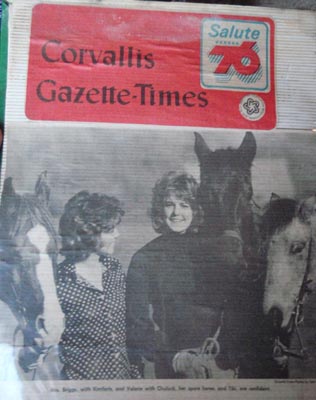
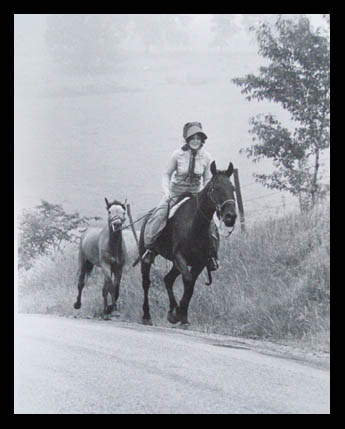
17-year-old Valorie Briggs was on the starting line, donning a bonnet that her great grandmother had made for her, and wearing jeans and boots - endurance attire back in those days. Her half Arabian half mustang Tiki wore his attire - an old McClellan saddle and long-shanked snaffle bit; they were leading their anglo Arabian partner Chuluck. Valorie's mother, Mary Lou Briggs, was also on the starting line on her horse Daniel (the Arabian stallion, Kimfaris, that she had hauled across the country had died suddenly before the race started, from a previously undiagnosed disease), though Mary Lou ended up dropping out after about a week.

They all almost dropped out. At Watkins Glen, New York - not a week into the Great American Horse Race - the organization ran out of money and the ride stalled. According to a document on the ride, "Although race founder Randy Scheiding put the purse in Escrow in Sacramento, there was no guarantee that the race would ever get that far."

Valorie remembers her dad helping form a riders' committee that started collecting money from riders - which wasn't part of the original deal - and pooling it together to pay the vets and vet students, pay for the ride help and support crews, and keep the ride going. "They were very seriously considered shutting the ride down," Valorie says. "But everybody had worked for a long time to get their horses ready, to get back there [to New York]; this was their dream. And so we formed a committee. They all put their heads together to figure out how we could keep this thing going." This wasn't something for a teenager to worry about anyway. For Valorie, she was on an adventure, riding her horses across the United States.

One dramatic aspect of the race that left a big impression on Valorie was Mother Nature.

"Places like Kansas, Missouri... they have hailstorms and rainstorms that are so bad, you can see 'em coming from miles away, a wall of black coming, and you know you'll have just a couple of minutes before it hits you. You'd put your poncho on, and pull it down so you could barely see out of the eye hole, and it would still drench you. Drenched. It would hit so hard it would almost knock you and the horses over.

"I remember thinking after I got home, that I had always thought it rained a lot in Oregon... and I realized that the weather in the West is much nicer than anywhere else!"

Valorie also remembers being pelted lightning across the plains. "One rider got knocked off the horse by the lightning coming close by. I also remember crossing over this railroad track, and I heard the lightning strike the track somewhere down the way - you could hear it sizzle through the track, and I thought, what if you clipped a horseshoe on that railroad track when the lightning hit - you'd be fried!"

Then there was the White Lightning.

Valorie was too young to drink, and didn't like it anyway, but she recalled the moonshine's established place around the campfire. "A lot of times we were in a dry camp, no electricity, and invariably someone would set up a circle of chairs and a start a campfire. Someone would get out the whiskey, and they'd break one of those chemical lights (glowsticks), and drop it down in the whiskey, so you could find the whiskey jug."

"Not everybody drank," Mary Lou remembers, "but some drank quite a bit! Valorie is one that actually broke up a party one night. because she broke a light stick, and she drew a skeleton on her one horse's butt (Chuluck, the dark bay), and she ran him around the edge of the camp, so they only saw the skeleton, not the horse.

"It scared people - they'd all had enough to drink - they didn't know what that was! That ended the party right there! The White Lightin' - it was powerful stuff, I guess!"

Regularly at night - when the ride hadn't lasted till after dark and the riders and crews weren't so exhausted they went straight to bed and collapsed - people gathered around the campfire for entertainment. Valorie's sister Denise would get out her accordion, and she and Valorie would start singing (they later had a quite successful start to a singing career, as "Valli and Dee"). "Everybody would sing, and we'd play music, drink whiskey and talk."

Valorie recalls the time in camp when a 'follower-on' or groupie of the ride, pulled a stunt. "This girl borrowed a really nice buckskin horse from a cowboy. She peeled off her clothes, and rode as Lady Godiva through camp."

Mary Lou adds, "And she did it the day that the Mormon Bishops had come to the camp to see the horses. They made her leave. She was no longer allowed in camp."

There was the time a rainstorm left a camp chair soaked, and one by one, people sat down and accidentally got a wet butt. It became a game to see how many other people could be enticed to sitting down in the chair. "It was hilarious. I bet there were 30 people there with wet butts! It was silly, but you amused yourself with whatever was there," Valorie says.

There were Johannas the Count from Austria, and his friend Walter from Germany, riding Icelandic ponies, and the time they needed to clip their hairy Icelandics because they were getting too hot. They happened to clip the ponies in a bathroom in a state park, because that was the only place they could plug in the clippers.

Mary Lou laughs recalling the incident with the state park rangers. "They told the riders, 'You can't clip those horses in here! You gotta get them out!' Johannas and Walter spoke no English - the rangers were talking gibberish to these guys - and they were just clipping away, and by the time the rangers got it through to their heads what they were saying, all 4 of the horses were clipped. There was hair everywhere in the bathroom!"

There were rest days along the trail... sort of. In some towns, locals would be invited to come out and see the Great American Horse Race riders and horses. Sometimes the riders saddled up and put on a little show. Jumps were set up once, to show what the Connemara pony could do. "Verle Norton [another competitor] and I were sitting there on our mounts, and he was actually making fun of the Connemaras, and said he was going to go jump with his mule. So we just took off together and raced over the jumps. I thought Tiki had much better form than the mule!"

In some towns, Mary Lou remembers the schools would be let out and the kids would be lining the streets as the riders went by. "People were excited about the race. The riders had fans! They'd be yelling, 'Valorie! Tiki!'" They'd bring out drinks and apples for the riders and horses."

But the Great American Horse Race wasn't all fun and games.

There were times when Valorie remembers it was no fun at all. "It was gruelling. If you were sick you still had to ride... I was really susceptible to heat rash. I can remember finding a creek; I'd find a flat rock and lay under water with only my head out. I was miserable."

Then there was the time she fell asleep in the sun too long. "When we were in Colorado, we had a day off, and i laid by the lake soaking up sun. I was in my swimming suit and got sunburned really bad, my whole back and the backs of my legs. I remember trying to get on and ride the next day with a really bad sunburn, sitting in the saddle in my jeans... that was painful, and i was really sore for several days. Yea, that was a bad move!"

There were chiggers. There was humidity. "Back east, Pennsylvania somewhere, there were a few days of humidity. Both Tiki and I were sick. He had hives, I had hives... I don't do well with humidity. And that was the only thing that bothered Tiki the whole trip. His pulse would be down in the vet checks, but sometimes we couldn't get his respiration low."

Keeping the horses comfortable and healthy was the priority of everybody in the ride. All the worming and vaccinations had been taken care of at home in Oregon well before the race. During the race, the Briggs had (at the time) a rather innovative setup in camp for their horses - an electric fence that they ran off the generator of the truck. While many horses in the race spent their nights tied to their trailers or high lined every night, Valorie's horses were able to stretch out and lay down whenever they wanted.

Every night their legs were bandaged. When the ride passed through Kentucky, they met an old Standardbred groom who gave them a secret formula liniment to put on the legs. "Everything was in it - tuttles, witchhazel, alcohol..." It could be rubbed on the legs or put in a bucket for soaking. It felt good to sore human joints, also.

Shoeing was a hot topic. Valorie's shoer had worked for a year on her horse's shoes before figuring out what would be the best way to do a ride across the country. "I wound up with a leather pad, with silicone underneath to keep anything from getting under there, and then a 'half round shoe' with borium on it." The shoe was shaped and gotten ready, then borium was run all around the toe and on the heels and welded on. "It's harder than steel, so your shoes don't wear through the borium. Tiki never wore out his shoes. We probably shod him every 4 weeks."

A half Orlov stallion had been entered in the race, but the owner didn't know about borium. The horse constantly wore right through his shoes, and was being re-shod every 5 days, to where eventually he had no hoof to nail to. He didn't last long in the race.

Nothing about the trail was intimidating for Valorie. But then, with all the crazy things she did on horseback growing up, she didn't scare easily. "Every day was an adventure in that the trails were always different; there were some that were pretty, some that were easy and some that were a little rougher, but none of the trails were bad enough that you thought 'Wow, i wouldn't want to have to ride that trail again!' "

She got bucked off only once but she had a good excuse. She'd ridden Tiki the first half of the day, and switched to Chuluck the second half of the day. She usually kept both horses saddled, and led the extra one with a rope and halter. Instead of leading Tiki by hand on this day, she'd put a jerk knot in the lead rope, attached to the back of her McClellan, where she could just jerk it loose if she needed to untie him.

Riding into a town at the end of the day, she came to a stoplight where a man was directing the way to camp. "We were on a paved street at a 4-way intersection, and when we stopped, there were cars behind me, cars going different directions. Tiki walked up to Chuluck and put his head down to smell something on the pavement, Chuluck stepped sideways and got his hind leg over the rope, and soon as he did that, Tiki raised his head, and the rope ran right up the crack of his butt, and Chuluck started bucking in the middle of this intersection - with Tiki still attached to him. I was thinking, Number One, he's going to kick Tiki in the head and kill him, and I'm out of the race, and Number Two, he's going to throw me on this pavement and I'm going to die!

"We always rode with a 'Mountain Tie', where you can get down and jerk your cinch loose on your saddle. It's saved my life more than once. Somehow, from the saddle, while Chuluck was bucking, I reached down and yanked my jerk knot loose, and the entire saddle came off. And as soon as it came off, there was no reason for Chuluck to buck, and he stopped and stood there, and Tiki was standing tied to the saddle laying in the middle of the street."

Mary Lou said, "People said they'd never seen anybody unsaddle a horse while on top of it!" Of course it was just one of the things Valorie had learned when growing up.

One thousand miles down the trail, the Great American Horse Race arrived in Hannibal, Missouri to rest a few days and participate in Fourth of July celebrations. At the time, Valorie was in 5th place, and her photo was one of six that graced an article about the race in Sports Illustrated.

But just four hundred miles later, with over half the race completed, in Red Cloud, Nebraska, Valorie decided to scratch Chuluck. He was starting to consistently come up with a sore shoulder. That pretty much ended any chances of her winning the race, since trailering a horse doubled the riders' ride time for the day. While that was a disappointment, Valorie still had the goal of riding across the rest of the country with her little half mustang.

And they did it. Tiki carried Valorie the 1400 miles, across the flat plains, into Wyoming and Utah ("beautiful country!"), across Nevada and into the Sierra Nevada mountains. Their route took them over part of the Tevis trail, and ended on September 5, Labor Day, in Sacramento, California.
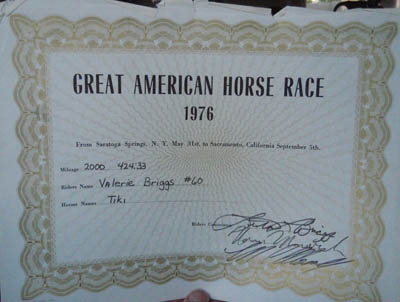

It was 59-year-old Virl 'the Mule Man' Norton from California who claimed first prize with his two mules, Lord Fauntleroy and Lady Eloise. Out of 54 finishers, Valorie Briggs finished 14th. Her horse Tiki looked like he'd just been out for a few days' ride: he'd gained weight over the summer and his coat was dappled out.

Though Valorie hadn't won, the enormity of her accomplishment struck her then, and still resonates strongly in her today. "We did something that nobody had ever done before - ride across the United States, something we'd have the rest of our lives. I can say, I rode my horse from New York to California! It really was an adventure."

With the inevitable question of, Would she do it again, Valorie gets a faraway look in her eyes. "I could still do it today. There's a lot of things i can't do at my age (52) that I could do as a teenager, and I might be a little more tired at the end of the day... but i could still do it.

"And actually, I'm a far better and more knowledgeable horseman now than I was when I was a farm kid in Oregon. I could ride then, but now I have years and years of knowing horses. If I knew then what I know about horses now, I would have won the ride."

Valorie breaks into a smile. "I'd go find me the right horse, and they'd have to beat me. It wouldn't be a Gimme!"

If she does ever try it again, don't bet against her.
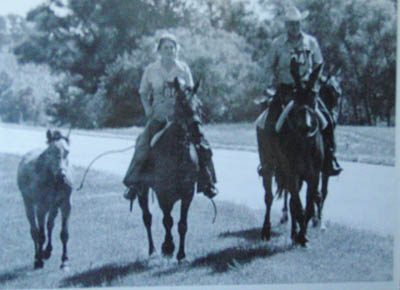

*Photos from Valorie's scrapbooks*
Top: Valorie riding Chuluck and ponying Tiki
Bottom: Valorie riding Chuluck and ponying Tiki, riding alongside the eventual winner, Virl Norton and his 2 mules
Sunday, February 13, 2011

Ann Hall and HCC Zara RR: Catch Me If You Can


Monday February 14 2011

What's surprising about Californian Ann Hall and HCC Zara RR topping the 2010 Meydan FEI Endurance Open Combination World Ranking is not that they accomplished it. What's surprising is that Zara almost never made a riding horse at all.

It was Ann and Hal Hall's son Quinn who came up with the idea of buying another HCC mare while they still could. The Hyannis Cattle Company of Nebraska had produced some outstanding endurance lines in the 1960's through the 1980's, but the ranch is no more; and that breeding had been very good to the Halls over the years in the sport of endurance.

Kosciusko, a pure Polish Arabian (a son of Witez II) was one of the first premier stallions of the Hyannis Cattle Company in the 1960's. He was the sire of El Karbaj, winner of the Tevis Cup with Hal Hall in 1974 and 1977, and the Haggin Cup in 1972 and 1978; he was the grandsire of HCC Zarlusko (by Koszar), 5-time Tevis Cup finisher with Hal Hall including a win in 1990; and he was the grandsire of Bogus Thunder (by Koszar), 5-time Tevis Cup finisher with Ann and Hal - four of them in the top ten, and the Haggin Cup winner in 2002. HCC Zara RR's maternal grandsire is Koszar (by Kosciusko).

While searching online, Quinn found a 5-year-old mare in Colorado with the perfect HCC pedigree.


Hal bought the mare and gave her to Ann... but they didn't see the mare for half a year. HCC Zara RR had exceptional breeding. But the thing about HCC horses is: "HCC can stand for Hard to Catch Critter!" Ann says. Ann called the owner in Colorado. "I asked him, 'Is she going to load in the trailer?' He said 'Um... I'll get back to you.'

The mare was indeed hard to catch. It was about six months before the man called and said that Zara would get in the trailer now. He loaded her up with her gelding half-brother, Thunder Cloud - whom the Halls bought as an endurance prospect also - and shipped them to California.

"When Zara arrived, I thought 'What was Hal thinking!?' They'd bought her on her pedigree. But she just didn't look like an endurance horse."

Plus, they couldn't catch her. Ann had to leave her wearing a halter with a lead rope attached to have any hope of catching her. Much of her training consisted solely of being caught, and just standing at the tie rack. Over time Zara gradually increased the time she could stand tied by herself. "There was some internal nervousness in her," Ann recalls, and she just couldn't be rushed.

And what with their training of Tevis horses (the primary endurance focus of the Hall family every year), Ann couldn't concentrate solely on working with Zara. The result of that was Zara was still pretty much unbroke as a 7-year-old. Hal finally told Ann that she either needed to train and ride her, or breed her, or lease her, or sell her.

So in the summer of 2008, Ann and her son Quinn worked with 7-year-old Zara diligently. And finally, "One day, you could just see her go around the turn. Quinn did such good ground training with her, schooled her so well, that when we sent her off to trainer Mark Schurman, in January, he got on her back the next day; and she did her first endurance ride 8 weeks after that."


Zara completed 6 of 7 rides her first season, 2009, including the Eastern High Sierra Classic 50 miler, in her fourth ride, carrying Hal for the first time. In fact, the morning of the ride was the first time Hal had ever sat on her. "At the vet check at 25 miles, Hal looked worse then he does after he finishes Tevis!" Ann recalls. "He couldn't slow her down! His knuckles were sore from bracing his hands against the pommel of the saddle."
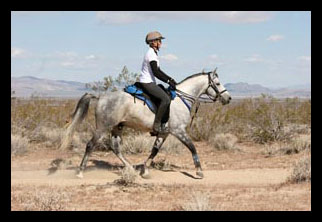
Instead of pawing, like some horses do when they're nervous, Zara paws when she's mad. She'll strike out with a front leg waist-high, and slam it down to the ground. "She was doing that at the trot because she wanted to pass horses!" Eventually by the second loop she'd calmed down somewhat, and Hal and Zara ended up finishing 4th and winning Best Condition.
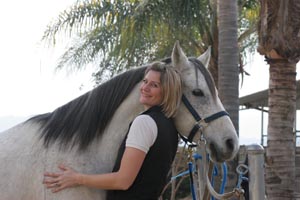
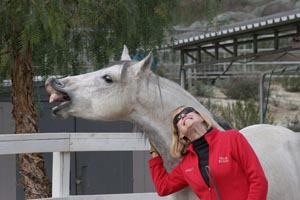
Zara's first season also included a completion in the AERC National Championship 50 with Hal - her first FEI 1-star ride.

In 2010, Ann's goals were not to race, but to get through the FEI qualification system, and finish all their rides in the West. She thought they'd try for the list of FEI combination horse and rider: "I looked at what it would take to accomplish it and made up a schedule. The goal of top FEI combo coincided nicely with Hal's and my desire to support the FEI competitions on the west coast and support the ride managers that take on the extra work and financial risk."

They accomplished exactly that, completing the CEI** Git R Done 75 miler, the Sun City CEI* 50 miler, and two CEI*** 100-milers - the Git R Done (finishing in 6th place), and the Patriot's Day at Lake Almanor (in 4th place), and the Desert Gold CEI** 75 miler (in 3rd place).


Nine for nine in 2010, and sitting atop the World pair Ranking (HCC Zara RR also ranked 9th on the Meydan Open Horse World Ranking), the little mare still does not look like an endurance horse. "But she overcomes her looks. That's the most exciting thing about endurance - a horse breaks preconceived boundaries of the rider."

Bogus Thunder was always Ann's Perfect Horse. "He makes my heart smile. Having Bogus in the barn has been a wonderful experience and I am so grateful for the opportunity to have been able to ride him, and for me he has been the perfect horse. I know endurance riders dread having to bring along a horse to replace that special horse and I was no exception. When I looked at Zara, I just did not expect that I would like riding her so much.

"It used to take 4 people to catch her; now she's a pocket horse. She's so much fun! I love riding her. She's very strong and very determined. I find myself giggling sometimes while riding her."

Zara likes to go, though with experience, she's more amicable to being paced. And Ann's still not in a rush. "I love bringing a horse along and developing them. Making a good horse takes so much time! Last year I didn't want to find her reserve, so I rode conservatively. My goal this year, 2011, is to have fun. Maybe I'll try a little speed in training, and see how she does. But at any speed, I look forward to seeing how Zara does. It's going to be fun!"

Thursday, February 10, 2011

The Great American Horse Race: Wild Terror on Horseback


A profile of Valorie Briggs, Tiki and Chuluck: competitors in the 1976 Great American Horse Race

When you're young and infatuated with horses, nothing seems unattainable. You can do anything. Like ride all the way across the United States, from New York to California.

"I was always horse crazy. Always," says Valorie Lund (back then she was Valorie Briggs).

"We had a horse named Ginger that Mom would put us up on for our naps every day, to get us out of the way, so I literally grew up riding before I could walk. And I rode all the time. That was our whole entertainment growing up in Oregon - we would ride. We rode, incessantly, and we did crazy things on horses."

Now a Thoroughbred racehorse trainer from Phoenix, Arizona - with one of the top sprinters in the country, Atta Boy Roy - in the 1970's she was just a teen-aged horse crazy rural farm girl from outside of Philomath, Oregon.

"I always rode with a big coat on. When you wanted to go somewhere, and there was a fence in the way, you'd lay your coat over the top strand of barbed wire. That way your horse could see it well and it was there in case he clipped the wire, and you'd jump the barbed wire fences. We swam our horses down rivers. My middle sister Leslie and I would tag team deer. The game was to see if you could get close enough to touch them. You'd jump logs, you'd jump fences, all bareback. We always rode bareback. The folks wouldn't let us ride with saddles, because if you came off, at least you came off clean, you weren't going to get hung up somewhere."

Valorie's sisters and cousins would play Riding School. One person would play the riding instructor; the rest would play students. "The students would try to make it hard on the instructor. You'd get on backwards, kick your horse into a run, and start screaming, so the instructor had to run you down and catch you and get you put on your horse correctly. Or you'd uncinch your saddle (if you were riding with one), and let the horse run off, and see if you could jump things without a cinch. We all got to where we could get on and off, step into a saddle without turning the saddle with the cinch unbuckled.

"We were wild terrors on horseback. But that was all of our entertainment."

Main accomplice in her escapades of terror was a little buckskin mustang-Arabian cross, no bigger than 13 1/2 hands. Valorie broke him herself when she was around 10 or 11 years old. "Tiki went just about anywhere, did about anything. But - he was ornery!" Valorie shakes her head and laughs, still vividly recalling his antics 35 years ago. "He was really ornery! He was too smart for his own good. He'd do what you wanted... if he felt like it."

One time, Tiki readily loaded up into a Volkswagon van for her dad and uncle. Valorie is still amazed and amused at that sight: "So they're driving down the road, and they got a horse's head between two guys in the front seat, and they're going fishing!"

That horse had a definite sense of humor. "You could do pole bending with him, and as soon as you were leaning one way, he'd duck out the other way and drop you.

"Pretty much any place you wanted to go, he could either jump over and get in, or crawl through, or crawl under. He could literally get you anywhere.

"He was like a big dog. BUT. if he didn't want to do something? You know what? He wasn't going to do it. But he was amazingly athletic."

Valorie's mom Mary Lou agrees. "I saw Valorie take that horse over logs. There was a section up near our farm where a guy ran cattle, and he didn't fence it because there were all those trees down. But Valorie'd walk that horse up and down those logs, all the time. He didn't believe there wasn't no place he couldn't go."

Valorie was 16 years old when she saw the article in the Western Horseman magazine announcing the 1976 Bicentennial Great American Horse Race. A 3200 mile, 99-day horse race across the United States, from Frankfort, New York to Sacramento, California, might sound daunting to most people. But not to a horse-obsessed girl who lived on Tiki's back. And Tiki was one of the main reasons Valorie knew she wanted to do it. "'Oh my goodness,' I thought, 'there's no horse tougher than Tiki! If anybody can do it, it would be him!'"

It would be a challenge, but the physical and mental endurance that would be needed for such a ride wasn't anything she wasn't familiar with. Valorie had learned endurance riding from Elwin Wines, who finished the 100-mile Tevis Cup ride three years in a row, from 1970 to 1972, and was the 1975 National Endurance Ride champion. He taught Valorie what he knew about the fledgling sport of endurance. Valorie crewed for him, then rode a few endurance rides herself. With that, and her practically living in the saddle anyway, the Great American Horse Race was a natural progression.

The only thing intimidating about the race was the steep $500 entry fee. "That was a lot back then," says Valorie. "I showed my mom and said 'Oh man I'd really like to do this, but it's $500 to enter'. Mom said 'You know? If it's something you really want to do, we'll figure out a way to do it.'"

And they found a way. Valorie went around town and got sponsors. They got their truck, their horse feed, and the truck camper sponsored. All Valorie needed now was one more horse (riders were allowed two mounts; both mounts had to be on the trail all the time - one ridden, one ponied - or time penalties were assessed).

She and her mom went looking for "a tough horse that could do a lot." They ended up on a ranch in eastern Oregon where Valorie tried out 9-year-old Chuluck, a bay Thoroughbred cross who'd been wild for his first 4 1/2 years. At the time Valorie was told he was half Arabian, although in retrospect she doubts that.

Chuluck was saddled up for her. "He had a long spade bit on him, and a tie-down. They had one of the cowboys get on him and ride him around first a little bit. He'd freeze up, then he'd sky leap, but you'd never know which way he was going to go. I figured out later if you'd just let him go, he'd be okay, but if you tried to ease him down, slow him down, he'd explode. He was a pretty wild horse..."

Valorie rode Chuluck for the first time that day on an all-day roundup.

A pig roundup.

The rancher planted potatoes on top of the mountain, and when he was done digging up the potatoes, he turned pigs out to root up the rest and scour the acreage. When they were done, ranch hands would round up the pigs on horseback. It wasn't easy. "The pigs would hide, and they'd shoot out of the brush just like quail in every direction." Valorie like the spunk and athleticism of Chuluck, and ended up buying him for $500.

She was set. Plans were laid; training commenced. Valorie worked on getting herself and her horses in shape for riding 6 days a week, 45-70 miles a day, through all kinds of weather, for over 3200 miles.

And Valorie wasn't going just to ride in the Great American Horse Race: she believed she had a good chance of crossing the finish line first. There was an enticing $25,000 purse awaiting the winner in Sacramento. "If I didn't think I had a good chance of winning," she said in a pre-race interview, "I wouldn't enter." And she believed she had the best horse in Tiki. "Tiki is far from beautiful," she said back then, "but he is a good horse for endurance."

In April of 1976, Valorie, her mom Mary Lou - who also started the Great American Horse Race on an Arabian stallion named Kimfaris, her father Lester, her grandmother, one of her older sisters and her brother, and three horses loaded up for the drive from Oregon across America to the start of the race in Frankfort, New York.

A teenager, her smart 8-year-old half mustang and her 10-year-old ranch horse... and the whole of a country to conquer.

"At least we'll be able to say we've done something almost nobody else in the world has done before."


Next: Part 2

Thursday, January 13, 2011

Shagya: KS Rubin


Thursday January 13 2011

There are several things you notice immediately when you lay eyes on the Shagya stallion KS Rubin.


He's handsome, conformationally outstanding, and extremely disciplined and mild-tempered. As a 5-year-old, he was described as having a "charming personality." And he's friendly. "He gives good hugs!" says Deane Zahn, one of his riders in endurance competition.


And one would swear he has a sense of humor.

He's also flawlessly bred, and that's one of the reasons Katherine Voyer, of Oak Knoll Sporthorses bought him as a 5-year-old in 2005. With only one Arabian in his fourth generation, (a purebred Shagya is not allowed more than seven Arabian ancestors out of the sixteen in its fourth generation), you can't get much purer than that.

He'd been imported from Germany to Illinois by Donna Cross as a long yearling. Around that time, Katherine had been looking for a stallion to 'balance' the white hot racing Polish, and Polish-Egyptian cross Arabian mares she had been breeding and racing.

"I did a lot of research, and entertained every reasonable breed, and I ultimately settled on the Shagya."

The Shagya breed was developed in the 1700's at the Imperial Stud in Babolna, Hungary. The cavalry was in need of a mount with more intelligence, bigger bone, better feet, better training ability and temperament, and one that was an easy keeper. This sturdy new breed developed from the native Hungarian mares that were crossed with desert Arabians - and was named after Shagya, one of the most influential foundation desert Arabian stallions from Syria that was used in the beginning.


Today Shagyas are known for their athletic ability, their steady temperaments, their jumping ability, and as an 'improver' of other breeds of horses. The Shagya breed is still rare, with less than 250 horses existing in the U.S. and about 2000 worldwide; but most of those who own them are fiercely loyal to them and believe in their abilities. You can see this devotion in all of Rubin's 'girls.'

One of those girls is Carolyn Hock. Carolyn is one of those who is still a horse addict now, probably because she couldn't have one when she was growing up in the Mid-West. "We couldn't afford a horse, but we had a Pony Club down the road. I would beg, borrow, and steal to ride anything with four legs."


Later, when married, it was her husband Chris' fault. "He made the fatal mistake of saying, 'There's no reason why you can't buy a horse.'" At this, Carolyn and Chris both laugh. "We bought a horse from a garage sale," says Chris. "$400 for the saddle, and $100 for the horse!" 'Silver' turned out to be a fun Tennessee Walker-Appaloosa cross.

Eventually, as Fate would have it, Carolyn and Dottie McAdams, an endurance veterinarian and rider, crossed paths. Dottie talked Carolyn into riding her Arabians. "I said sure, since I was used to riding anything. The first time I got on an Arabian, I found myself in the dirt. I thought, 'Well! This is different!'" Carolyn was used to riding anything, but she wasn't used to Arabians spooking.

Carolyn naturally got into endurance riding because of Dottie: "It's all her fault, and I told her that!" And as whimsical Fate would have it again, the first endurance horse that Carolyn bought from Dottie, GT Sando, turned out to be her best.


Carolyn first saw Sando after Dottie bought him as a three-year-old from Lee and Garvin Tankersly. Carolyn recalls he looked like a cross between a giraffe and a deer. "But Dottie was able to see the potential in him. She taught me a lot about that."


Carolyn bought GT Sando at 5, when he was much better looking - especially on the endurance trail. In ten years of competition, they completed 2410 AERC miles together, finishing 38 of 44 starts, including 10 of 16 100-milers, one of those being the Tevis Cup. They also finished 11th in the 2003 Pan American Championships at Trout Lake, Washington, won Team Gold at the 2005 North American Championships at Fair Hill, Maryland, and finished the 2005 World Championship in Dubai.

It was these accomplishments that made long-time endurance rider Ruth Waltenspiel recommend to Katherine Voyer that she send KS Rubin to Carolyn Hock for endurance training.

Carolyn's response: "I don't do stallions."

She did agree to go look at Rubin, and found herself impressed with his extraordinary temperament and training. After Rubin had done a solid year of dressage training under Sue Eoff, Carolyn agreed to take him on for endurance.


He turned out to be a gem. "With stallions, you always have to pay attention, but Rubin's management was impeccable."

Deane Zahn, another of Rubin's 'girls,' agrees. "He's 100% compliant, intelligent. I'm a scientist grad student (and a recent convert to endurance from the dressage world, thanks to Carolyn) - I can really appreciate intelligence in a horse."

Deane has the majority of miles on KS Rubin so far - 630 of his 1465 miles - and she recalls a ride in Ridgecrest where a dog spooked Rubin (all riders in Ridgecrest know this naughty dog, who throws himself against a board fence when riders are going by, and have been almost spooked off their horses by him!) and she almost fell off. "Rubin didn't panic, didn't run off - I was hanging off the side of his neck. He just stood there and looked at me funny while I pulled myself back into the saddle. He took great care of me!"

Another rider, Laura Hayes, echoed that phrase about her ride on KS Rubin in 2009. "The day I rode Rubin was the last day of Bryce. I had ridden two other horses that week that were not mine, the first one bucked me off on my head - I was barely in the saddle and came off the other side. I had a wicked head and neck ache all week The second, while a wonderful horse, caught a toe during a big trot and went down on my leg on a gravely road. I had a nasty road rash from above my knee to half way down my calf on the outside of my leg.

"By the time I got on Rubin I was really sore. He jogged through that 50 miles like he was carrying a child - I was hurt and pretty out of it. I couldn't get off when I normally would, and I think I was probably close
to useless to him as a partner. He didn't know me from Adam, but he took care of me and we finished. I haven't seen him since, and I went straight to bed I was so sore and tired, but when I do see him again, I
have to apologize to him and thank him for taking such good care of me!"

While he does behave very well, Rubin does notice the equine ladies on the trail... he is, after all, a stallion. "Sometimes he'll slooooooooooow down and drag along if a mare is behind him, or he'll speed right up if one is in front of him," Carolyn says. "He always knows where the ladies are! But if he starts thinking about anything other than working on the trail, that thought is stopped - and that's the extent of it."

"He does prefer redheads!" Deane says.


Katherine Voyer has never ridden her horse. A back injury has kept her off horses since before she got Rubin. She doesn't complain, but she does have that wistful look in her eye. "I'd like nothing better than to get on him and ride a 50 or 75 - just get on and go..."

But instead she contents herself with raising good horses and watching Rubin, her prized horse, continue to grow and develop.

KS Rubin is quietly amassing accomplishments as he trots down the trails. "We had two goals last year. One was the Jim Jones Award (for the highest mileage endurance stallion for the year), and one was to have a number of different riders on him, to show how rideable and manageable he is." Rubin finished second in the Jim Jones Award with 960 miles, and he carried 6 different riders to finishes, including two Young Riders.

In 2010, Katie Bran and Rubin finished 10th in the 75-mile North American Young Riders FEI ride; and Deane Zahn rode Rubin to a finish in the 75-mile Git R Done FEI ride. These finishes contributed to KS Rubin becoming the highest ranked FEI endurance Shagya stallion in the world for 2010. He's also the all-time endurance high-mileage Shagya stallion in North America.

KS Rubin is recorded in the RPSI (Rheinland Pfalz-Saar ) Stallion Book 2; he can be used as an outcross in the Hungarian Felver and Hungarian Sportlo books of the Hungarian Horse Association of America; and has been inspected and approved for Shagya breeding by the NASS (North American Shagya-Arabian Society) and ASAV (American Shagya Arabian Verband registry).


Due to his endurance competition, KS Rubin isn't breeding, but Katherine had him collected before he began his training, and frozen semen breedings are available. He has produced three outstanding-looking youngsters out of Katherine's Polish mares; four-year-old Renoirr is in training with Carolyn Hock and should make his first Limited Distance start in the fall of this year.

KS Rubin fits the typical characteristics of the Shagya breed description exactly: he's 15/16 Purebred, he's 15.1 hands, he's an excellent natural jumper (witnessed at his 2007 ATA Inspection), and he's very people oriented. "Rubin loves 'hands on' more than any other horse," Deane confirms. "He loves being touched, groomed, and handled."

And he already appears to have the ability to 'improve' breeds, if his three offspring Katherine owns are any indication. "I think three-year-old Rodinn is going to be even better than Renoirr!" Katherine says, with an unbiased gleam in her eyes.

KS Rubin still has many more endurance competition years ahead of him, and he'll be steadily working toward accomplishing more goals.

And a couple of young sons will soon be following in his footsteps, making their own marks.


KS Rubin gallery
KS Rubin 1/13/11


Renoirr gallery
Renoirr 1/13/11